Showing posts with label business. Show all posts

Friday, January 4, 2013

Trespass, an Anthology!

I have officially become an editor as well.

So here's what happened:

A few years back I signed up for a writing site with most of those associates you see over there on the right of the blog. In those days few if any of us were published, but we helped each other out as best we could.

So fast forward a bit, and now all of us are published, and some of us recollected in best ofs and the like. In order to continue helping each other out, we got together and bundled several of our previously published stories. Our hope is that as we make further sales, anyone who goes looking for one of us will find all of us, and hopefully fall in love with the people they hadn't seen before.

The anthology's only 99 cents- perfect try-it-out price. Don't be shy. Go pick one up for your e-book device. 

Tuesday, November 6, 2012

Escape Pod!

(First off, if you haven't voted yet, go vote.)

The Escape Pod semi-annual flash fiction contest ended yesterday.

I WON!

Actually I both won and took fifth place out of 92 (we were allowed two entries), which was a weird combination of awesome and nail-biting horror for me. I was terrified I would place twice and feel like a total toolbag for making it so there were two published winners instead of the the regular three.

Some of my dearest friends have been perplexed by this reaction. Do I feel guilty about taking first place, they ask. No. Or, well, I do a little, but not enough that I'm not bouncing around like a loon for having got it. The prize is something I've wanted for years: publication on Escape Pod, which is the big bad granddaddy of the fiction podcasts. It's one of those magazines I want to be in because I read it (or in this case listen) and it blows my mind on a pretty routine basis (others include Drabblecast, Lightspeed, Clarkesworld, Strange Horizons, Beneath Ceaseless Skies, Shock Totem, Lady Churchill's Rosebud Wristlet, etc).

So, yes, I desperately wanted to win first place.

But first place is really enough, you know? Anything past that feels uncomfortably greedy.

I wrote the organizer before the finals went up and talked to him about taking the second story out of the running entirely. He talked me out of it, and I'm glad he did, but I still breathed a sigh of relief when that story was coming in a relatively distant fourth, and then got passed up on the last day to come in fifth. It was still a good showing, and it's way better than I showed in the previous competition, with one going into the semi-finals, and one making it to the quarter.

And, speaking of being greedy, this raises a big question.

There are also contests for Podcastle and Pseudopod, both of which I love and would love to be on.

Do I enter these, or do I take my win, bow out gracefully, and give somebody else a chance?

And if I do enter, do I risk entering two?

Questions. 

Wednesday, May 23, 2012

Men's Fiction

Esquire announced its intent to publish straight to e-book anthologies of "Men's Fiction", and I am cautiously optimistic.

I'm actually really for publishing "Men's Fiction" and labeling it as such. The editor hopes for stories "dealing with passages in a man’s life that seem common," which I think is a fantastic thing to do. Let's talk about boys being expected to fight. Let's talk about the draft. Let's talk about fatherhood. Let's talk about not knowing for sure if a sexual partner's offspring is also yours. Let's talk about the expectation of being the breadwinner, or the directionless feeling when that's no longer expected and one doesn't know exactly what is. Let's talk about being expected to be physically strong in the way women are expected to be physically beautiful. Let's talk about the intersections of masculinity and race in our society. All of these are valuable and important and potentially great stories that are generally pretty specific to men.

I think one fantastic thing about directing attention to the idea that there is specifically masculine fiction is that it helps put wedge between masculine fiction and general fiction being masculine by default. I like the idea of there being a gender continuum with delineated poles and a broad neutral ground in the middle where the subject isn't anything gender-particular, but rather the human condition. Not "women's fiction and general fiction", but "women's fiction, general fiction, and men's fiction".

I am, of course, also leery, because often when people say "men's (anything)" they mean either straight up pornography, or a sort of he-man woman hater's club business that tends to be pretty distasteful. But I'm optimistic that's not where this is going.

EDIT: Aaaand it's been pointed out to me Esquire has a long history of excellent fiction. Here's the highlights of the Esquire collected anthology 1993:

"The Snows of Kilimanjaro" by Ernest Hemingway; "The Death of Justina" by John Cheever; "Towel Season" by Ron Carlson; "Parker's Back" by Flannery O'Connor; "Adult World I" and "Adult World II" by David Foster Wallace; "Neighbors" by Raymond Carver; "Fleur" by Louise Erdrich; "A Man in the Way" by F. Scott Fitzgerald; "In the Men's Room of the Sixteenth Century" by Don DeLillo; "Rock Springs" by Richard Ford; "The Remobilization of Jacob Horner" by John Barth; and "The Things They Carried" by Tim O'Brien.

That's a really boss line up and I'd love to see them carry on in that tradition.

Tuesday, April 3, 2012

Why Don't You Just Sex It Up a Little?

So I was speaking to an older gentleman I know who also writes, and he was lamenting the fact that he had never been particularly good at networking- something he felt had cost him in his potential writing career. We got into talking a bit about conventions and meeting people, and he expressed the opinion that I had a bit of an advantage as a young, attractive woman.

Maybe, I said, but I really don't want to use that.

Grow up, he said, everyone does on some level, and it's not as if you would pick your nose in public, or deliberately spray when you talked, just because you felt like it gave you an unfair advantage over people who did.

From there we got into a discussion about the fact that because of some bad experiences (though certainly not as bad as it's gotten for some other people) I'm hesitant to put even flirtation, never mind actual sex, on the table. I don't want any more stalkers outside my door in the middle of the night leaving me phone messages that they know I'm home because they can hear me moving in my dark apartment and why won't I pick up the phone? I don't really want to get grabbed any more because my jeans were tight or my shirt was too low. I don't want any more perfectly nice guys who think we're going to be together forever because I smiled too wide or I laughed at their jokes. The last one's almost the worst, because they really are perfectly nice guys, who aren't doing anything wrong, really. Most times it's just a miscommunication. I've been on the other side of that and I feel terrible turning them down (admittedly, occasionally when you turn a perfectly nice guy down, he'll start with the passive aggressive recrimination, or even outright meanness and then I feel a little better about the whole thing, or at least about the choice, because he wasn't so perfectly nice after all).

So, you know, carry a jacket you can button closed over a low top, don't let people buy you drinks or dinner, take a step back and hope they don't close the gap, shut down conversations and escape them if they start drifting in that direction, that sort of stuff (because I don't really drink, I'll often just pick up someone's discarded bottle and carry it around with me, so that no one thinks I'm too much of a wet blanket, and if someone asks if I want a drink I can wave around my bottle as if I'm still working on one). One falls into patterns of being around folk.

I don't want to give the impression that I don't like people, or I'm afraid of people generally, or I don't try to be fun, maybe even a little flirty sometimes, and for what it's worth I like sex and don't feel obligated to pretend I don't,  but I feel pretty cognizant most of the time that it's very easy to get backed into a corner where either someone expects something from you physically or you're some kind of horrible tease (and before you the reading audience write in to say that's horrible, or that's not true, or that shouldn't be true, yes, yes, I know and I agree with you, but there's a very wide gulf between theory and practice, and I don't live in a hypothetical world.)

What I'm trying to say, I guess, is that flirting and giggling and dangling my body out like bacon on a string might indeed snag me some additional contact stuff, but it's perilous on so many levels, not the least of which is being tarred with the professional reputation of having either teased or outright slept my way into work- or even if I myself manage to get out not-at-fault in that scenario, having work dismissed as "oh, they just bought her story because they thought she was cute." Part of what I love about writing is that until I go to a convention, what I look like never enters into it. I have a feminine name, but for all anyone actually knows I could be 90 years old and 500 pounds. I don't have to post a picture on my blog if I don't want to, and I honestly don't think anyone cares about the physical body attached to a random name in the slush pile. It's beautiful and liberating.

And then there's the perhaps more lasting interpersonal level where people I could have been friends with become frustrated would-be boyfriends, and I lose out on a friend because the threat of sex came into it. I would so much rather just be one of the boys in possession of an incidental vagina. I want to be nice. I want to be your friend. I want to be your peer.  I want to laugh at your jokes because they're funny. I want to hang out in a group full of mutual respect with people who love the same things I do. I really, really, really want this, and anything else in my professional life, not to be about sex.

Because making it about sex makes it a no-win situation.

Saturday, March 3, 2012

Wednesday, February 1, 2012

On Picking Projects

I have an embarrassment of riches when it comes to things I could be doing with my writing time. I have multiple notebooks full of ideas- some of them even sketched out into acts and arcs. I have what's frankly become a shameful number of first drafts and stories I really meant to finish. I have some novels that are not ready to send out yet. And on top of that, I'll very often sit down and just bang out something new, either for a prompt or a specific anthology opening.

Picking what to do is something I really need to be better at.

Mur Lafferty once said she has a big jar with all her projects in it, and she will draw one at a time from the jar, work on it until it's done, and then draw another one. I'm not quite that disciplined- in fact I find when I'm stuck, going off and doing something small and different will often jostle me out of my funk. On the other hand, there have certainly been things I've walked away from and failed to come back to.

At present, the first for me is social- if I've promised a story to someone, if it's a group activity with friends, if it's something for a project someone I like is doing, that will usually take precedence.

Secondly it's impersonal deadlines- deadlines have just always been a big kick in the pants for me, and I'm trying to stay more aware of upcoming anthology and themed publication deadlines, and either write to them or find a story that fits well enough but needs a little polishing.

Then there's the question of moments of inspiration. Lately I've been of the opinion that when you've got the surging drive to work on something, you may as well work on it until it's done, so that's a spanner in the works. Fun is very often a main motivator for me, because I'm resigned to not turning a great deal of profit on this.

Then there's shame. There are things I've started and meant to finish, and knowing I haven't finished them fills me with that productive sort of self-loathing that means I have to correct the deficit I have allowed to happen.

Honestly, this is something I need to be much more disciplined about, and probably something for which I need to form some sort of plan, but on the other hand, I really do enjoy the strange spontaneous turns things take when I fall in love with an idea, or rediscover something fun.

I don't know, how do you fine folks out there in internet land handle this situation?

Monday, January 30, 2012

From the Publisher Side

A blog post about a day in the life of the publisher.

Tuesday, January 3, 2012

Another Notch In My Lipstick Case

I was scrambling around frantically most of December and I missed this post by Ken Allen Wood about authors promoting magazines in which their work has appeared. (Mr. Wood is, by the way, the editor of Shock Totem, which was the first magazine I ever sold to, and currently has all its back issues available electronically for a mere 99 cents each or free through amazon prime.)

I've promoted Shock Totem a couple of times on the blog, in part because they keep letting me write little things for them, and in part because Ken is a really stand up guy who's kept in communication with me this whole time. He didn't just buy my first sale, but he clued me in on the opportunity that resulted in my second one. He also comes by and comments on the blog. He's just generally been someone who I feel has gone over and above, and that's the sort of thing I want to pay back. (I admit, I've also done it because Shock Totem has some of the most gorgeous cover illustrations in all of horror. I mean just look at it.)

I've promoted the magazine less in my personal social media spaces because I've kind of skittishly compartmentalized, and I'm not 100% sure I want my conservative christian relatives asking me about stories where people eat each other next Thanksgiving (though it's going to happen anyway, I think. My mother and father have been pimping this magazine pretty hard).

I guess I'm sort of torn on it. I feel a little strange promoting aggressively if it's something I'm published in; honestly, it's easier for me to tell you Shock Totem is something you should buy when it's not my particular issue, because that feels less like I'm just beating you over the head to pay attention to me. I've also got no problem pointing you at places I haven't been published but I like to read. And I know I gushed like a cat-ear-hat-wearing fangirl when Drabblecast said they'd take one of my stories, but I'd also gushed about them before that.

Ken's question is "are writers obligated to promote the places that publish them?" I guess I kind of fall in the general area of "no, not obligated, but unless the publication has actively dicked with you, it seems like the decent thing to do, whether they publish you or not". Magazines don't necessarily make a lot of money, and most of these guys are alive by the skin of their teeth. We writers and readers have a symbiotic relationship with magazines. The better they do, generally the better they're able to do by us. Sometimes that means buying a digital copy of Clarkesworld instead of a chai latte. Sometimes that just means that when you read a really good story, you point it out to everyone else you know who might like it. Yeah, magazines absolutely can't take either their writers or their readers for granted (or even their potential writers or readers), but that goes both ways. If you want the genre to be healthy, the best thing you can do is buy, give, and promote, especially if it's a magazine you think does it right. Pimp your favorite semi-pro zine and see if you can help it go pro. Help us build a thriving short fiction ecosystem.

Or at least that's how I feel about it. What do you guys think?

Tuesday, December 20, 2011

My Year In Rejections

So far this year I have twenty-four rejections.

This isn't a pity party (if anything, I feel this is too few rejections, because it means I have not been submitting more), I bring this up because I've been speaking to a number of writers who are fretting about the sting of rejection. Really, it's not that bad, and the more you do it, the easier it gets. Also, it's not like these guys have terrible fangs on them. As an illustrative example, I've collected my rejection letters for a year. I've taken the names and the stories out of the letters because that's not really what this post is about.

Seriously, new writers. It's not as bad as you're worried it is.

So, here you go: My Year in Rejections.

Edited to Add: I write quick thank you notes for all my rejections, even the form ones, unless the letter specifically says not to. I don't know to what extent this helps, but I figure it couldn't hurt.

Sunday, September 25, 2011

Tuesday, August 30, 2011

ArmadilloCon Roundup

Alright! ArmadilloCon was this weekend, and it was both a hoot and a holler. Now we begin a veritable orgy of name-dropping and promotion.

The writer's workshop, organized by Stina Leicht, was fun. There were some great writers' workshop presentations: Lou Anders Hugo Award Winning Editor of Pyr Books gave very thorough talk on Hollywood story structure, and the panel on publishing traditionally vs. electronically (also including Mr. Anders) was very thought provoking. There was also a hack-for-hire group game where one of the editors on the panel went through our three sentence story ideas and "improved" them with ideas like "this would be better if it had mexican wrestlers" and "this needs a redemptive arc, and a mecha robot made of bread", which was a nice exercise in writing to spec.

(incidentally, mine is as follows: An overworked female baker trying to make a new cupcake flavor accidentally creates a highly addictive flour-based narcotic that, in excess, has effects much like leprosy. Before the side-effects come to light, the baker buys herself deeply into debt with a mansion, a yacht, a gold-plated dog, and a trophy husband. When her baking is outlawed she has to bake gingerbread men for the mafia to pay off her creditors, all while being pursued by a vigilante celiac hit squad (note: food fight over industrial ovens a la Terminator 2). The baker escapes by diving through an industrial mixer that chops off some of her limbs (in the original version she ended up in a cupcake rehab house, already creating a recipe for her next drug, but the editor said redemptive arc and bread mecha). At her lowest point she constructs herself a biscotti mech armor suit/prosthetic shell in order to go on a revenge killing spree. She defeats the mafia boss and his thugs, but is greviously wounded. Standing over the ill gotten fortune she helped create, she decides to use the last of her time for good, and bakes the money, prosthetic recipes, and instructions for a foundation into a stripper-sized cake to get it past the police. The story ends with her trophy husband receiving a cake delivery. (My guess is this would be about 5000 words, and I really should write it))

For my group instructors I got J M McDermott and Matthew Bey, both of whom were full of trenchant comments. I'm hoping to get the story edited and out tonight.

I also got to hang out a bit with Nate Southard, Scott A Johnson, and Marshall Ryan Maresca, all of whom are very sweet gentlemen.

The toast was also darling, and you can see it on Lou Anders webpage. No one can accuse the toastmaster of not being literal enough.

Of the panels, my favorite hands down was the one on Class with Maresca, Will Shetterly, Scott Lynch, and the fabulous, fabulous Joe R. Landsdale, who talked at length about his own childhood in poor East Texas. It doesn't hurt that I could sit for hours and listen to Landsdale, but everybody brought some interesting points to the panel, with Lynch making the point that he tried to set his fantasy full of con artists in the middle ages and then realized that the middle ages lacked the social mobility and range of classes that would be necessary for confidence crimes.

Also exceptional was the world post fossil fuels panel, in which guest of honor Paolo Bacigalupi really got to shine. He was also good in Building Societies from the Ground Up.

The Erotic Writing panel was a barrel of laughs, and I got to use the phrase "cock-holster" in appropriate context in public conversation (the question being worst/best genital circumlocution). I really enjoyed the poetry panel, even if it was a touch slim on attendance (I was not expecting McDermott to be as awesome as he was there, but I especially enjoyed, of all things, his football poem). The late night ghost story panel was creepy in the best possible way. Scott A Johnson is the kind of person you want to be around a campfire with, far enough away from civilization that no one can hear you scream. The Pyr books presentation was unexpectedly delightful, and I really want to get a copy of Black Dog by K. V. Johansen. I also wish I had a book to sell to Pyr, so that Anders could bubble over with enthusiasm about it the way he did about every one of the titles he was promoting. It's really awesome to watch someone enjoy books that much.

The Elizabeth Moon/Wiscon discussion was... interesting. I'm somewhere between Lee Thomas and Scott Lynch's positions (basically, Wiscon as an organization totally has the right to disinvite a guest over a public statement they feel either does not conform to their core principles or threatens the financial stability of the con, and Elizabeth Moon has a right to say what she likes on her personal blog, and both do have to accept the consequences of it. Frankly I really like Wiscon's new mission statement, and I feel like there's a big difference between telling Moon she's no longer welcome at Wiscon (which they did not do) and expressing that they are no longer comfortable having her specifically as a guest of honor), and it was kind of heartbreaking to see how discouraged Thomas got with how many people were putting Wiscon totally at fault as the bad guy.

That's ending the post on kind of a down note, which really wasn't my experience of the con. I had a great time, the panels were interesting, the readings were cool, and the people were, without exception, lovely to speak to and open to talking. It was a great time and I encourage everybody to get out and mingle with the fandom.

Monday, August 15, 2011

Bright Publishing Statistics

To counter the doom and gloom, New York Times reports the publishing industry has expanded in the last two years.

Thursday, June 2, 2011

100th Post Extravaganza


First off, I sold another reprint of Sweepers to the fabulous folk at Neon- A Literary Magazine! Do go check out their stuff, and buy from them if you're so inclined.

Also, after much doodling, I finally have a skull I like. I had hoped to have some serious coloring of it done and to be able to post it as a background for my hundredth post. I try not to make a great many excuses to you fine people, but I just recently started a new job where I've been pulling 11 hour shifts at minimum, so that hasn't come together quite as much as I'd hoped. Soon though.

On the writing front, for a given definition each of "story", "a day", and "May", I have completed the story a day in May challenge with 31 pieces of fiction, many of them flash, the last ones finished on June 1st. My plan for June is to go through my catalogue and edit to submission quality one story per day. (I have to admit, I don't think I'll actually achieve that goal, but just trying should put me well ahead of what I had done before.)

I've also passed my 100,000 words written or edited for the year. That puts me not entirely on schedule for 2011, but not terribly behind either, and it's a delightfully round and large number, like a sort of arbitrary milestone Rubens.

The ads have been working out well, I think. They're not terribly obnoxious, or even, I think, too grabby or tacky. My contract states that I may not tell you what I am earning per click, but I am allowed to accurately represent how much money I've made from the program. I've been on them for about two months and I could very likely pay for a fast food combo meal for both myself and a friend. Which, when you think about the fact that I was planning on doing this for no money at all, is a nice little perk.

I admit, when I started blogging, it was with a great deal of reluctance. I was digging my heels in and shouting about how I didn't wanna go. But now that I've been at it a bit, I really enjoy it. I've gotten to say a thing or two, I've attracted the notice of Mr. Tim Pratt, and when I want to say "hang on, I think I had a link to that somewhere!" I can always come back to the blog and click to it quickly, which is really just great for me in casual laptop-out conversation. I enjoy watching the blog stats, seeing where people are from, getting the occasional comment here and there.

I like it. I plan to keep on it.

Goodnight out there, internet, until we meet again.

Sunday, May 8, 2011

Sacred Cow Murdering

Dean Wesley Smith has a series of articles entitled Killing the Sacred Cows of Publishing. He takes on the task of disabusing the writing public of what he considers to be pernicious myths such as "you can't make any money writing fiction" and "stories get better when you rewrite them". Like any advice, I'd say don't buy it wholesale, but examine it and see what applies to you (for example, you can't make a living writing fiction doesn't apply to you until you have a full compliment of novels and short stories, but that's exactly the point of the article: that just because you can't make money writing fiction at first doesn't mean you can NEVER make money writing fiction). There's some really good stuff in there.

Thursday, May 5, 2011

Conventional Experience

(Advance warning and disclaimer: this post contains a lot of names. I'm doing this not in a vein of riding the coat tails of people mentioned, but rather because they're all wonderful people, some of whom you might not have heard of, and they all deserve your attention.)

World Horror Convention was spectacularly fun. I apologize that it's taken me as long as it has to get around to the blogging of it.

The whole experience was very educational for me. My familiarity with horror as a genre is kind of unfortunately skewed- I own almost every annual issue of Ellen Datlow and Terri Windling's Year's Best Fantasy and Horror, and my understanding of both genres is somewhat defined by the fact that I didn't really differentiate within those volumes which stories belonged in which categories. They were all just dark, weird, and lovely. It does, however, mean I have a sample of horror that misses a lot of the greats, as well as broad subsections of the genre that would have fallen outside of Ms. Datlow's general taste. I also wasn't paying so much attention at the time to the authors as I was to the story.

So a lot of World Horror Convention for me was discovering new writers, as well as attaching names to stories I hadn't realized were written by people I should have known. Joe R. Lansdale in particular falls into this latter category. I don't understand why this gentleman isn't the official spokesman for Texas. He's a world class martial artist who writes stories about beating people (and sometimes zombies) into blood-oatmeal in one of the most spectacularly fun, pulpy ways I've ever read. I also was able to have some wonderful conversations with authors like Wrath James White, Rio Youers, and Joel Sutherland, as well as publishers and editors like Jeff Burk and Rose O'Keefe of Eraserhead Press, Boyd Harris of Cutting Block Press (who it turns out had met and remembered my father), the whole adorable, sweet gang from Absolute X Press, and most especially, more than anybody else, author, editor, and general awesome fellow John Skipp, who has got to be the sweetest man working in mutilation ever. I also found out my TA from college, Scott A Johnson, has published 11 apparently excellent books since the last time I saw him. I got to meet fabulous animator Abby Goldsmith, cuddly writer Laura J. Hickman, writer and amazing illustrator Carlton Mellick III, writer R. B. Payne, Thomas Sipos of the Hollywood Investigator, and Denise Broussard. I got to watch Peter Straub, F. Paul Wilson, Cameron Pierce, and a very animated Sarah Langan give accounts, in a darkened room in front of a web camera, of their travails in the zombie apocalypse. And I removed a pen from someone's nasopharyngeal cavity with my teeth, which I think speaks well of how fun the parties were in general.

The panels I attended were universally fun, but my favorites were the panel on Violence and how to do it right, and the panel on Frightening Children for fun and profit. There was a lot of talk about e-books and Twilight (in terms both of people wondering if it could be a gateway horror product, and also bewailing the romantic degradation of a previously scary monster. "What's next?" they would ask, "Zombie Romance?" at which point someone would invariably raise their hand and mention the anthology Rigor Amortis, available in the dealer's room). I also managed to catch several wonderful readings, though my favorite, I have to confess, was the zombie golf comedy "Blood on the Green" by Joel Sutherland, forthcoming in Blood Lite III. Actually several of the panels touched on the close relationship between humor and horror, in terms of building tension and release, and how one can either diffuse or enhance the other. Jack Ketchum gave a hell of a speech in acceptance of the Grand Master of Horror award, and Nate Southard's opening remarks were heart wrenching. Joe Hill was full of hilarious anecdotes. I got a free signed copy of Black and Orange by Benjamin Kane Etheridge. I took extensive notes and now have a backlist of aproximately a gajillion books and stories I need to track down and read.

I didn't stay at the hotel (actually one of the main reasons I attended this conference specifically was that it was local to me) so I ended up getting about three and a half hours sleep a night (though part of that was that I also made a 150 mile round trip to attend a 9 AM job interview on the second day of the convention). In order to save money and not have to miss any panels or readings, I also stocked up on powerbars and munched them in between events, which saved me having to pay for hotel food or go off-site. Depending on your perspective and finances, this is either sound advice or utterly sad.

In terms of what this convention meant to me as a writer, most of what I got from it had to do with building my understanding of the genre and the craft, and building my confidence in what I could achieve from writing as a career. I didn't have much in the way of things to pitch or sell, but I had a great time, and I don't want to understate how wonderful it felt to be among a whole mess of people who loved a good scary story.

Saturday, April 23, 2011

Self-publishing

I've been reading some of the back and forth between TheWriteAgenda and Predators and Editors, Writer Beware, and the Science Fiction Fantasy Writer's Association, most of which seems to center around whether or not PublishAmerica is a pernicious predator on par with some sort of deep sea angler, dangling dreams in front of hopeful new writers in order to draw them into their toothy maw or whether they're really stand up guys who are providing routes of access for the little people into a market strangled by cronyism and a Manhattan bottleneck.

Incidentally, this is straight from the PublishAmerica website, bold original:

"Each day, an average 125 new authors who are looking to find a book publishing company ask us to publish their book, more than 30,000 per year, an absolute record in the industry. While we pride ourselves in maintaining lower acceptance barriers than any other traditional publisher, like all serious book publishing companies we have to be picky as we can only accept the works that meet our requirements in both areas. Our contract includes no author fees, period."


They have also apparently accepted one book deliberately written to be unpublishable and one book which was the same 30 pages repeated over and over, which doesn't say much for their review process.

It's also a little difficult to take TheWriteAgenda seriously because the Science Fiction & Fantasy Writers' Association is loaded with individuals whose names I know and whose work I respect, and Predators and Editors and Writer Beware have both been highly recommended to me numerous times in blogs and interviews of genre editors, writers, and columnists. TheWriteAgenda is, by contrast, an unspecified number of anonymous individuals who are not releasing their names purportedly for the noble purpose of not detracting from their crusade by taking time to self-aggrandize and peddle their own works.

But, whatever, really. I have trouble believing they'll have all that much of an impact. Anecdotes and weird politics of disinformation aside, this and a few other incidents both online and in my personal life have made me look a little more closely at self-publishing and e-publishing.

In the interest of full disclosure, I currently have absolutely no interest in self-publishing. I'm looking for the prestige that comes with validation by the current system. That's not just shallow glory chasing- I've read and genuinely respect a lot of the writers who comprise organizations like the Science Fiction and Fantasy Writers and Horror Writers of America. I've exchanged some really lovely e-mail, even in the form of rejection letters, with traditional short fiction publishers. I've sat at home and read multiple editions of Wilding and Datlow's "Year's Best Fantasy and Horror". I'm a writer specifically because I dream of someday being able to sit at a table with Kij Johnson, Tim Pratt, and Kelly Link and have them respect me as a peer.

I also, quite notably, lack a burning belief that I have, to date, written something that, in its present state, absolutely deserves to be published no matter what anyone says, which I think is kind of the cornerstone of self-publishing. And that's the thing of it- you have people who believe that, and they're absolutely right. There are authors who have built up huge fan followings and/or catapulted themselves into lucrative publishing deals. But then you've also got the Jacqueline Howett types, who've put out something full of spelling errors and get spiky when you point that out; but that's really the problem. When whether or not you do get published is entirely dependent on whether or not you can pay the cost or use the technology, there's not a mechanism up front to sift out the best from, well, those who perhaps might have benefited from a bit of gate-keeping. The best signal gets drowned in a flood of noise, and you have to rely on a new sort of gate keeper on the back end. Ultimately they're more democratic, and this is a point in their favor- popularity aggregates by word of mouth and the playing field is leveled, at least in theory, down to the skill and tenacity of the self-published.

I'd like to pause for a moment to make a few armchair observations, as an aside, about the future of publishing. I don't think traditional publishing models are actually in danger of dying, as long as they're willing to adapt to the new technology and the shifting market place. Some have, and they really seem to be doing well. I do think consolidation, especially as parts of larger corporate entities (Harper Collins, for example, is owned by Rupert Murdoch's News Corporation), tends to favor streamlining cost of production and a market strategy of fewer products designed to have the most broad appeal. The Top 40 model, in radio. While it doesn't necessarily mean those works selected are bad, it disincentivizes niches, risks, and untested talent. I suspect as the big six become more consolidated and printing technology becomes cheaper, we'll see a wider blossoming of small presses specializing in those three avenues, and the very best of e-publishing is just one more logical step in that direction.

I think the main problem, though, is not self- or e-publishing in and of itself. It's all the sharks in the water. Nobody wants to wait for their dreams to come true, and lots of people have promised a shortcut up and then run off once they had your wallet. Traditional publishers had the strength of their reputation as a safeguard against that sort of thing, though vanity presses and scams certainly flourished in their shade. (Not that that stopped Harlequin from trying to cash in on their name with an in-house vanity press.) With e-publishing, everything is relatively new and easy and the legitimate channels aren't well differentiated from the traps. But then you have the absence of gate keepers reducing the need for vanities at all. Why pay someone several thousand dollars to print your book when you can upload it right into the Kindle store yourself?

Ultimately dreams make you vulnerable. I don't think this makes it bad to have dreams, but you open yourself up to some hard knocks either way when you put tear yourself up, arrange it into words, and then try to get someone else to spend money on it. Most people won't, whether it's a traditional print editor or someone whose ninety-nine cents might conceivably buy them a heath bar instead of your book. Traditional publishing puts a lot more of that rejection up front. E-publishing downplays the rejection early on, but sometimes neglects to mention that even after you're published, that indifference still affects you profoundly.

Some people make it. Most people don't.

I love webcomics. For about the last ten years and some change, it has cost virtually nothing but a creator's time and effort to have a comic published on the web- so let's work for a moment on the shaky premise that the Kindle is the Keenspot for the tens. Over the decade, there have been thousands of these little comics being born and dying out. Ten years later, there are less than fifty comics that provide their creators with a living. It's one of those problems that sorts people into half-full and half-empty types. Thousands fell by the wayside, struggled in anonymity, or at the very least had to keep a day job (horrors!). The attrition is staggering by anyone's standards. But slightly less than fifty people who loved what they did were able to do it for a living, when they never would have been able to otherwise, which, you have to admit, is pretty damn cool.

So I guess those are my thoughts. The odds are still stacked against you, no matter how you chose to publish, but either way, you stand a chance to make it if you're good, and if you can put in the work.

Monday, April 18, 2011

Sweepers Reprint!

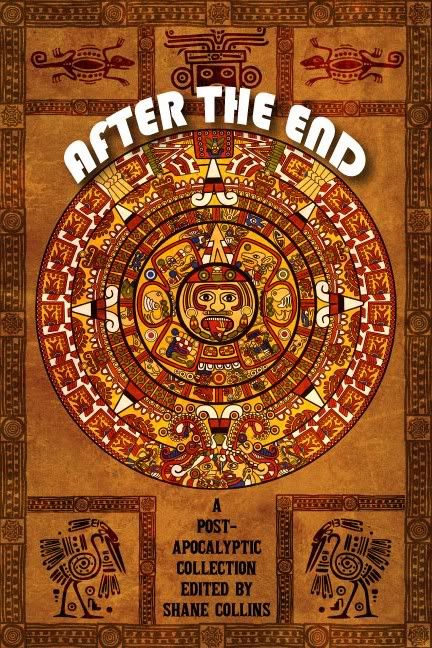
"Sweepers" (originally published in Shock Totem) is going to be reprinted in the anthology "After the End: A Post-Apocalyptic Collection" edited by Mr. Shane Collins over at Static Movement. There's no firm date for the release yet, but it looks like it's filling up fast.

And it has a spectacular cover. Look at that thing.

Wednesday, March 30, 2011

Legwork

Not my own, mind you. This is an article Chris Gavaler wrote about promotion after his first novel was sold to Harper Collins. It highlights the increasing trend of authors being expected to handle and pay for their own publicity. Not that this is an issue for me yet, mind.